
How AI Agents Are Changing Website Advertising and Monetization
AI assistants increasingly read, compare, and recommend for people who never open the source page. This guide explains what that does to traffic, ads, and publisher revenue, what is actually live (from ads inside AI answers to sponsored blocks written for agents), and how website owners can adapt without betting on forecasts.
Someone asks an AI assistant, “What’s the best project management software for a small business?” The assistant searches, reads a handful of review sites and vendor pricing pages, compares features, and replies with a recommendation and a couple of citations. The person reads it and starts a free trial.
The review sites that did the comparison work may get nothing from that exchange: no pageview, no ad impression, no affiliate click, no newsletter signup. Their content still shaped the answer.
It does not always go that way. Some assistants show prominent source links and send real visitors. Some answer from training data without fetching anything. Some readers click through because the summary made them curious. Products differ in how they search, cite, and link, and they change often.
The pattern is common enough to raise a hard question for anyone who runs a website: if AI systems use your information without sending comparable human traffic, where does sustainable revenue come from? This guide covers what is happening in late 2026, from ads written for AI agents to ads inside AI answers, licensing, and agent checkout, and separates what is live from what is still an experiment.

How websites have been paid until now
For two decades the open web ran on a simple loop: someone searches, clicks a result, and the site that earned the click gets a chance to make money from the visit.
Display ads pay per impression or click, so they need people on the page. Affiliate links pay when a reader goes on to buy from a merchant. Sponsored articles and newsletter slots pay for disclosed placement in front of an audience. Subscriptions, lead generation, and a site’s own products all start with a visitor deciding to stay, sign up, or ask for more.
That is why publishers watch pageviews, referrals, and conversion rates, and why experienced ones care most about audience ownership. Search traffic was always rented. The visit was the moment a site could turn it into something it owned, such as an email subscriber.
AI answer systems move that moment. When the comparison happens inside the assistant, the visit may never come. AI products also send referrals, though, sometimes from readers who arrive better informed and closer to a decision, which makes this shift harder to measure than “AI killed my traffic” suggests.
What changes when an AI sits in the middle
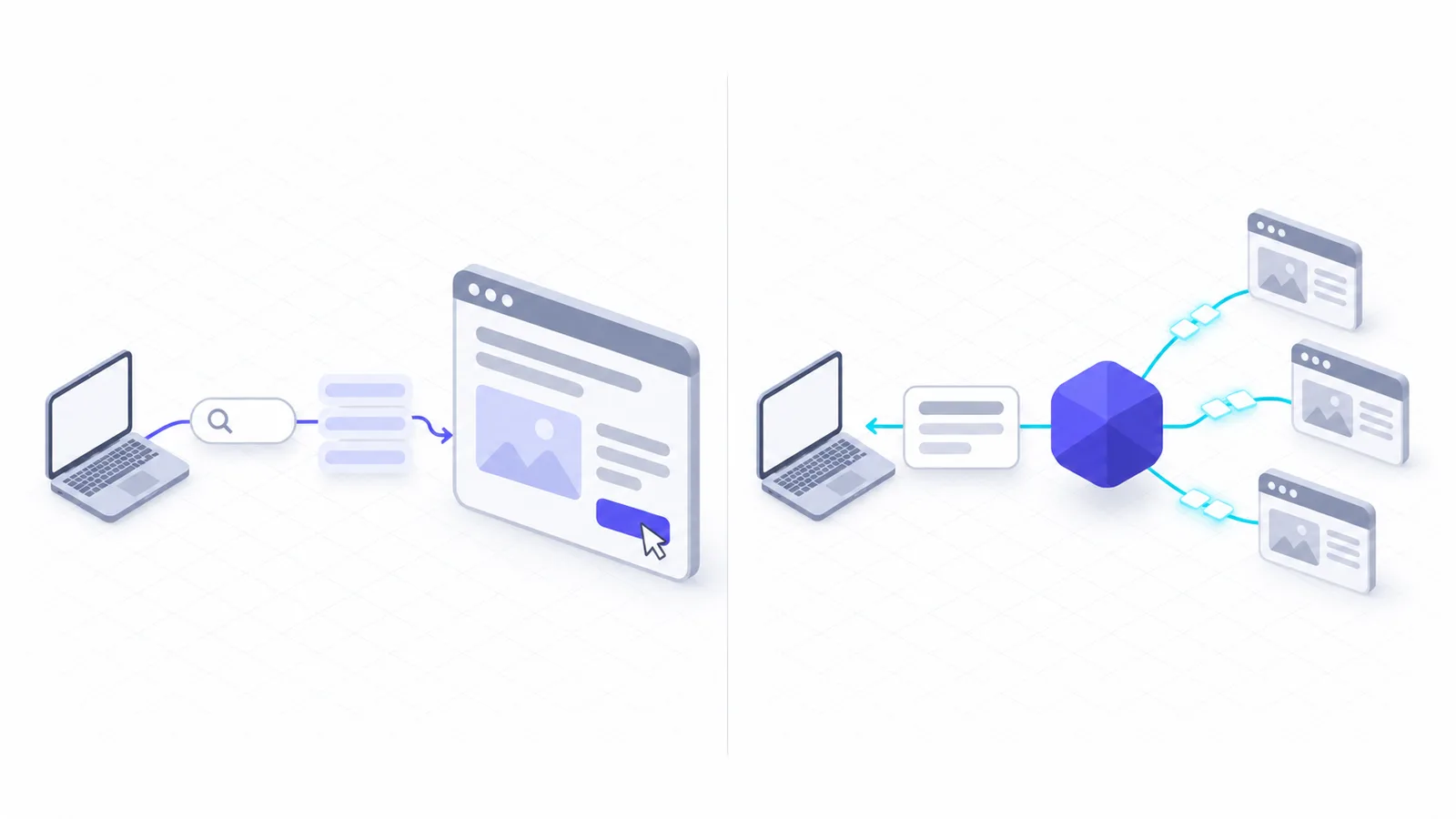
In the newer flow, a person asks an assistant or hands a task to an AI agent. The system retrieves several sources, summarizes or compares them, and returns an answer. Some products go further and take an action, such as filling a cart.
| Traditional search | AI-mediated discovery | |
|---|---|---|
| Who reads the page | The person | An AI system, sometimes followed by the person |
| What the person sees first | A list of links | A generated answer, with or without citations |
| Where comparison happens | Across open tabs | Inside the assistant’s response |
| What the publisher can measure | Visits, sessions, conversions | Crawler and agent requests, plus any referrals |
| Where money changes hands | On the publisher’s page | On the page, inside the AI product, or nowhere |
“AI traffic” covers four different things:
- Human visit: a person browses your site directly, from any source.
- AI referral: a person arrives after using an AI system, for example by clicking a citation in ChatGPT or Perplexity. From then on they are a normal visitor who can see ads, click affiliate links, and subscribe.
- Agent access: an automated system reads or operates your pages, such as a crawler fetching a page to answer a live question, or a browser agent working through your site for someone. No human sees your page.
- Agent-mediated transaction: an agent, with a user’s authorization, helps complete a purchase or another commercial action.
Model training is a separate activity again. A crawler collecting pages to train a future model is unlikely to send anyone back. An assistant fetching your page to answer a question right now, usually called retrieval or grounding, can come with a citation and a link.
How much AI systems read compared with what they send back
Cloudflare’s Radar service publishes a “crawl-to-refer” ratio: HTML pages requested by a company’s crawlers, divided by page visits arriving with that company’s domain in the referrer header. In Cloudflare’s August 2025 analysis of Radar data, the July 2025 figures were about 1,091 crawler requests per referred visit for OpenAI, 38,066 for Anthropic, 195 for Perplexity, and 5.4 for Google.
Read those numbers carefully. They come from Cloudflare’s network, not the whole web, and they count all crawling, including training crawls that never aim to send visitors. Cloudflare also notes that native apps, such as Claude’s, often send no referrer header, so the ratios are overstated by an unknown amount. They also move: Anthropic’s fell about 87% between January and July 2025, which Cloudflare linked to its web search adding clickable citations. The direction is still clear. AI systems read far more pages than they send readers to, and the gap is much wider than for traditional search.
Ads written for AI agents
If agents do more of the reading, someone was going to advertise to them. On July 30, 2026, Digiday reported that TIME had made text-only markdown versions of its pages, a format AI systems parse cheaply, and was selling sponsored blocks inside them through Mobian, an AI ad-tech company. The two companies describe it as the first time a publisher has sold ads aimed specifically at AI agents.
Per Digiday, Mobian turns a brand brief into an FAQ-style block that the advertiser approves, and each block opens with a “sponsored content” disclosure naming the brand. TIME added that label voluntarily; no policy requires it. TIME sells one agent ad per markdown page, with Ally Bank and the Project Management Institute among the first buyers, and did not disclose pricing. With no impressions to count, Mobian measures by asking AI search engines the questions the ad answers and tracking how visibly, favorably, and accurately the brand comes up over time. TIME’s COO, Mark Howard, was candid about the uncertainty: “We don’t know yet because this is brand new.”
Pushback came within two weeks. Perplexity told Digiday on August 11 that it had blocked TIME’s markdown ads from influencing its search index, and warned that “deceptive advertising like markdown ads” risks a hit to a publisher’s trust score. It did not say how it defines deceptive or how the block works. Earlier, BCG X’s Rob Derow had suggested AI systems might treat ad-bearing markdown pages as cloaking, which Google’s spam policies describe as showing users and search engines different content to manipulate rankings and mislead users.
So as of November 2026, ads for agents are one publisher’s experiment through one vendor, with at least one AI search company filtering them out and no published results. The plumbing is spreading for other reasons: Cloudflare’s Markdown for Agents, in beta since February 2026, converts HTML to markdown for AI clients that request it, mainly to save tokens.

Three business models that sound alike
Coverage of “AI advertising” often blurs three arrangements with different buyers, sellers, and rules.
Platform-sponsored placements. The AI company sells the ad and shows it to the person, separately from the answer. Ads in ChatGPT run on the Free and Go plans, labeled and set apart from the response, and OpenAI states that ads do not influence ChatGPT’s answers. Its Sponsored Agents format, a limited test with selected US advertisers, lets a user who taps an ad open a separate, labeled chat with a business’s own agent. Since November 10, 2026, those agents come from Businesses in ChatGPT, a beta where verified businesses claim a profile, add product feeds, and see aggregated mentions and clicks; eligible US ecommerce and online-service companies can publish a Business Agent there, and OpenAI says neither claiming nor advertising changes how often ChatGPT recommends a business (see ChatGPT and our guide to getting your business found in ChatGPT). Google is expanding ads in AI Mode, labeled “Sponsored,” and on October 28, 2026 added ten countries plus ads in US follow-up questions. The publishers whose content informed the answer are not part of these deals.
Publisher-side sponsored content. The ad sits inside the source, as with TIME. The advertiser pays for presence in something an agent may read, not for a slot in front of a person. Whether an assistant repeats it, let alone recommends the advertiser, is up to the assistant’s developer, and Perplexity has shown a system can ignore it entirely.
Agentic commerce. A user authorizes an agent to help buy something, and money moves through a checkout rather than an ad. Results so far are mixed. OpenAI launched Instant Checkout in ChatGPT in 2025, then in March 2026 moved away from it: shoppers now usually finish on the merchant’s own storefront. Google built the Universal Commerce Protocol with Shopify, Etsy, Wayfair, Target, and Walmart, announced in January 2026, and on October 15 launched Universal Cart in the US across Search and the Gemini app, with the merchant as seller of record.
For a publisher, the distinction decides where you can take part. You cannot sell ChatGPT’s ad space. You can decide whether to sell sponsored content, and agentic commerce mostly rewards merchants and the sources agents trust for product facts.
If publisher-side agent ads do spread, they bring back problems the display ad industry spent two decades building tools for. There is no impression or click to count, so measurement relies on indirect proxies. Advertiser reporting can show which crawlers fetched a page but not what an agent did with it. Disclosure only works if the label survives the trip to the person. And brand safety runs both ways: the publisher’s name backs the sponsor’s claims, while an AI platform’s judgment of the ads can attach to the whole domain.
Verification debt: when a sponsored claim loses its label
“Verification debt” is an informal term, used mostly about AI-generated code, for the gap between how much a system produces and how much anyone has checked. It applies to information passed between AI systems too.
Picture a chain. A sponsored block says a product has “no hidden fees.” One assistant summarizes the page and repeats the claim without the label. A second agent, building a comparison for someone else, uses that summary, which no longer points to the source. A third system sees two “sources” agree and treats the claim as fact. No single step was obviously dishonest, yet an advertising claim now looks like independent consensus.
Nobody has shown that today’s assistants routinely strip sponsorship labels. In a 2025 study that ran randomized experiments on AI shopping agents, the agents actually penalized products with sponsored tags. That was one study of simulated shopping, though, and behavior shifts with model updates. The risk is structural: every step that summarizes instead of quoting is a chance for the source and the label to fall off, and agent-to-agent handoffs add steps.
Rules written for human readers already point at the issue. The FTC’s native advertising guidance says an ad shouldn’t imply it is anything other than an ad, and that disclosures should stay in place when native ads are republished by others, including in search results. How that applies to an AI summary of a sponsored block has not been tested, and this is not legal advice.
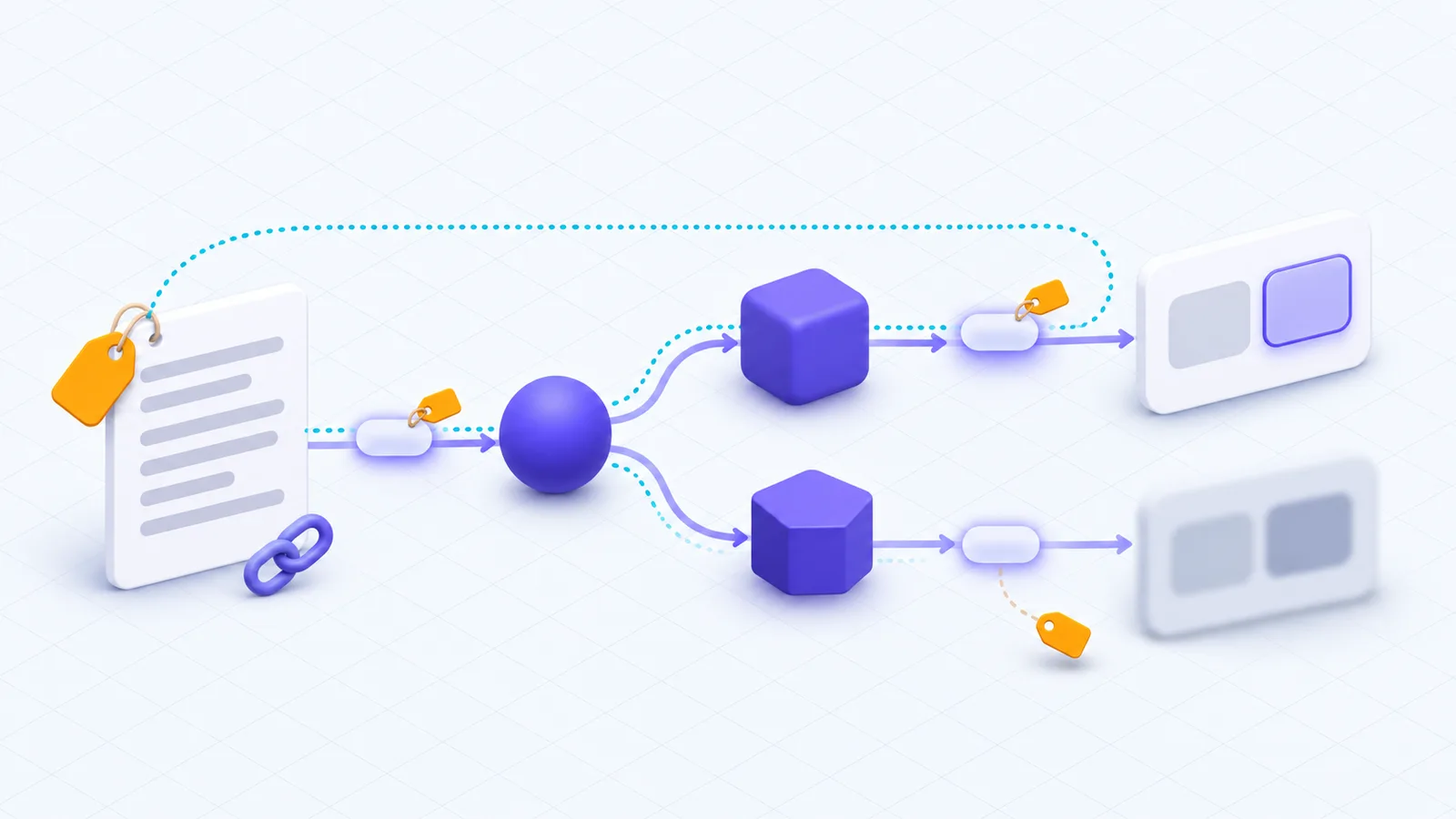
What publishers can do: label sponsored content in the text itself (“Sponsored by…”) rather than only through styling; keep editorial and paid claims in separate blocks; cite the evidence behind factual claims; keep structured data honest, never marking a paid placement as an editorial pick; and keep product facts current, since a stale price repeated by three assistants is still wrong.
What AI developers can do: carry the source URL, retrieval date, and any sponsorship label along with every claim (the idea behind provenance-aware memory); treat sponsorship indicators as data, never as noise to clean out; check claims against independent sources instead of counting repetitions; treat promotional text as untrusted input that, like indirect prompt injection, must never override system instructions; and put a human review step before purchases and other consequential decisions.
What AI search does to SEO
The best independent measurement so far comes from Pew Research Center, which tracked the browsing of 900 US adults in March 2025, covering 68,879 Google searches. About 18% produced an AI summary. When one appeared, people clicked a traditional result on 8% of visits, against 15% without a summary, and clicked a link inside the summary on 1%. That is one month, one search engine, one country, and a panel of people who agreed to have their browsing tracked, not a census of the web. But the method is published and the gap is large.
Google disputes the wider picture. Liz Reid, its head of Search, wrote in August 2025 that total organic clicks had been “relatively stable year-over-year” while traffic shifted between sites, toward forums, video, and first-hand perspectives. Google’s documentation says clicks from results pages with AI Overviews are “higher quality,” meaning people spend more time on the site. Google has not published the data behind either claim.
Both can be true: fewer clicks per search for some queries, a similar total, and very different outcomes for individual sites. In practice you may see pages cited in an AI Overview that fully satisfies the reader, your brand named by people who never visit, and click-through rates that fall without explanation, because Search Console counts AI Overviews and AI Mode inside its normal “Web” data with no separate breakdown.
None of this makes SEO obsolete. Google’s AI optimization guide says its generative features are rooted in its core ranking systems, and a page still has to be indexed and snippet-eligible to appear. It helps to keep four goals apart:
| Goal | What it means | What you work on |
|---|---|---|
| Traditional SEO | Search engines discover, understand, and rank your pages | Crawlability, titles, internal links, canonicals, useful content |
| AI answer visibility | AI search features can access and accurately represent your information | The same foundations, plus original facts worth citing |
| Agent usability | Authorized agents can navigate your site and complete tasks | Semantic HTML, labeled forms, explicit actions |
| Website monetization | Attention or transactions turn into revenue | Offers, tools, email list, partnerships, measurement |
Agent usability has its own guide, how to make your website ready for AI agents, and the reader’s side of AI search is covered in AI search vs traditional search.
Much advice sold as generative engine optimization goes beyond the evidence. No schema guarantees AI citations; Google says there is no special markup for its AI features. llms.txt is not universally required, and Google Search ignores it. Agents do not automatically trust structured data. An agent-friendly page removes obstacles but does not create demand. And a crawler request is not a reader, an impression, or a lead.
The revenue models, side by side
These options are not equally mature, and nobody has reliable average revenue figures for the newer ones, so the table compares how each model works rather than what it earns.
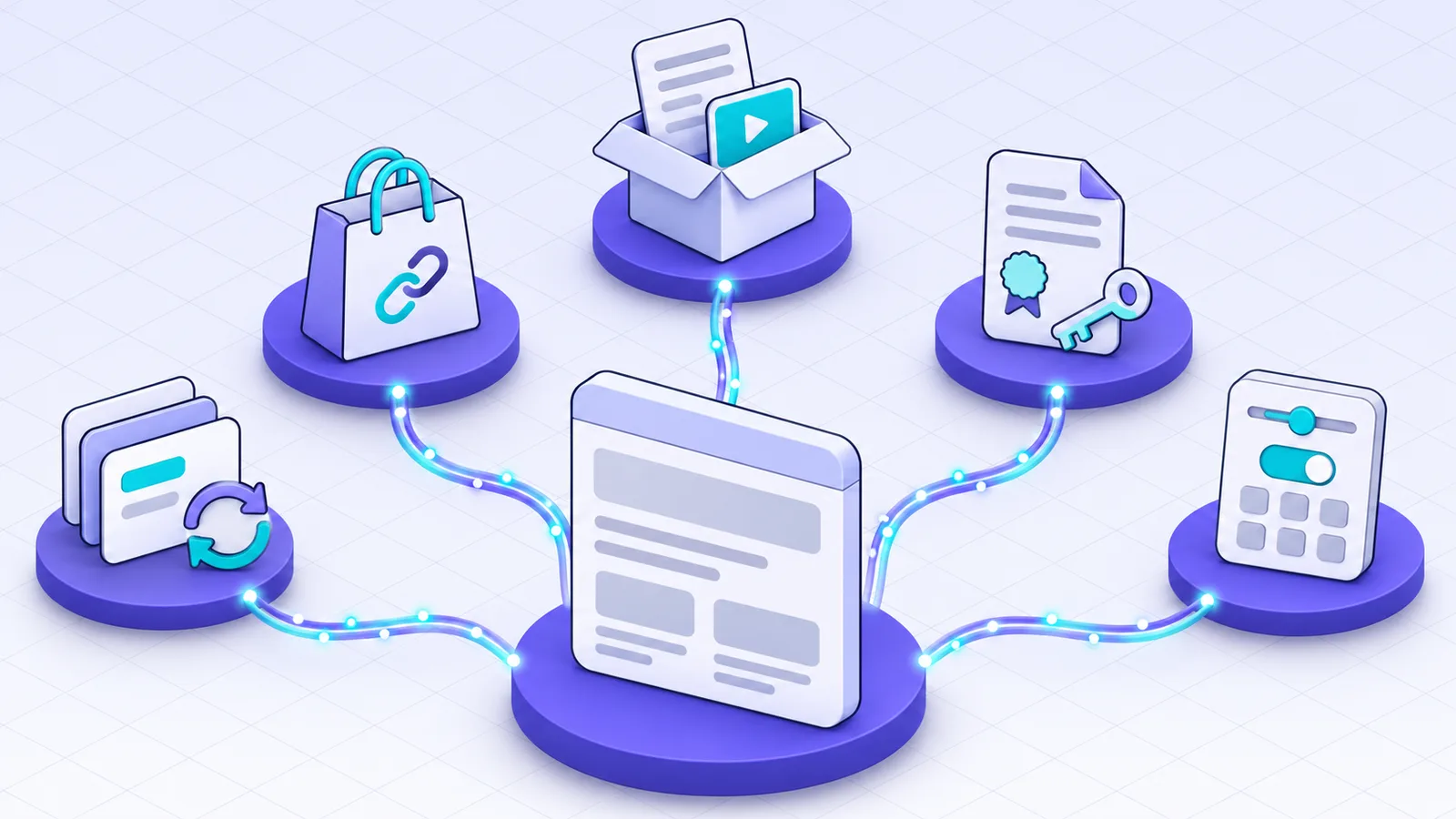
| Model | Who pays | What creates value | Needs human visits | Relevance to agents | Advantage | Main risk |
|---|---|---|---|---|---|---|
| Display ads (established) | Advertisers, through ad networks | Pageviews and attention | High | Low: agents are not impressions | Easy to start, scales with traffic | Shrinks with every lost visit |
| Affiliate links (established) | Merchants, per sale or lead | Recommendations that lead to purchases | High | Medium: AI referrals can convert | Tied to real buying intent | Answers replace the comparison step |
| Direct sponsorship (established) | Brands | Audience trust and topic fit | Medium | Medium | Higher rates, direct relationships | Credibility if disclosure slips |
| Subscriptions and memberships (established) | Readers | Analysis, community, tools, archives | Medium: people must find you | Low | Recurring, owned relationship | Hard to grow without discovery |
| Content licensing (emerging, mostly large publishers) | AI companies and platforms | Rights to content or data | Low | High | Paid without visits | Opaque deals; most small sites left out |
| Agent-readable sponsored content (experimental) | Brands | Presence in sources agents read | None | High by design | Revenue from machine readers | Platforms may filter or penalize it |
| Agent-driven commerce (early) | Shoppers, when the site is the merchant | Accurate product data and checkout | Low | High | Captures purchases agents start | Platform-controlled, changing fast |
| Tools, data, and services (established) | Users and businesses | Functionality an answer cannot replace | Medium | Medium: an API can serve agents | Hard to copy into a summary | Cost to build and maintain |
Licensing is real money for some publishers but remains bespoke. Cloudflare counts more than 50 publisher and AI company agreements since 2023 and has written that licensing is unlikely to fully replace lost referral, ad, and affiliate revenue. Newer programs pay by use. Microsoft’s Publisher Content Marketplace, a pilot since February 2026, pays participating publishers “on delivered value” when their content grounds AI answers. Google is piloting, by invitation, payments for content that meaningfully contributes to answers in AI Overviews, AI Mode, and Gemini; one executive told Digiday early returns were “peanuts.” Smaller sites mostly have infrastructure options, such as Cloudflare’s pay-per-use beta or machine-readable terms under the Really Simple Licensing (RSL) standard, all of which depend on AI companies opting in.
The last row deserves more attention than it gets. A calculator, a weekly dataset, or a template library gives people a reason to visit that a summary cannot satisfy, and an API can serve authorized agents on your terms.
A seven-step plan for website owners
None of these steps requires predicting what AI search will look like in two years.
1. Find out what is happening to your traffic
In Google Search Console, compare impressions and clicks by page and query over 12 to 16 months. Pages where impressions held steady while clicks fell are the likeliest to be answered on the results page. In analytics, review referral sources, top landing pages, and the paths to signups and sales. Expect gaps: some assistants tag the links they cite, others send no referrer, so part of your AI-driven traffic lands in “Direct.”
2. Identify what only you can offer
Look for what an answer has to borrow from you: original research, proprietary data, hands-on testing, expert analysis, interactive tools, honest comparisons, and factual resources you keep current. A page that restates a vendor’s feature list is easy to summarize away. A page reporting what happened when you ran the tool on forty real files is a source an answer needs to cite.
3. Make your site clear to people and machines
Use descriptive headings, semantic HTML, crawlable content, plain navigation, labeled forms, prices and limits in text, structured data that matches the page, and visible source references. The agent-ready website guide covers the details. Do not expose private or paid content, or weaken access controls, to court AI systems. And set your crawler policy deliberately: blocking search crawlers removes you from search, while Google-Extended, per Google, limits AI training and grounding in some of Google’s other systems, not Search.

4. Build relationships you own
Every visit is worth more when it can become a relationship. That means a newsletter offering something the site does not, such as a weekly digest of price changes in your niche, plus features that bring people back: a tracker, a saved comparison, a community, your own products or services. The guide to building a newsletter business covers the practical side.
5. Spread revenue across more than one model
A review site might pair disclosed affiliate links with newsletter sponsorships and a paid buyer’s checklist. A B2B blog might combine lead generation, a free tool, and licensing a dataset. None of these is guaranteed to work. The point is that losing some clicks should not mean losing all revenue.
6. Measure outcomes, not only pageviews
When fewer but better-informed people arrive, pageviews can fall while revenue holds. Track relevant traffic, engaged users, tool usage, newsletter signups, leads, affiliate conversions, revenue, repeat visits, and retention. Pageviews still drive display ads; they just say less about what a site is worth than they used to.
7. Test in small steps
Change one thing on a group of pages, such as more structured and current product information plus a better version of the tool those pages link to, and leave a comparable group alone. Compare referral quality and conversions over a few months. Treat the result as a signal, not proof, since seasonality, algorithm updates, and AI product changes move the same numbers.
Example: an independent AI education site
Imagine an independent site with AI tool reviews, comparisons, guides, workflow templates, and two interactive tools, a cost estimator and a skills quiz. It earns from affiliate links, a newsletter, and some display ads.
As assistants answer more “what is” and “which tool” questions directly, its definition pages will likely lose clicks first. A sensible response, with no promise of results:
- Make accuracy the product. Tool pages carry dated pricing and model details checked against vendor sources, because an assistant citing a stale price damages the site even when nobody visits.
- Invest in original tools. An estimator that uses the reader’s own numbers does something a generated answer cannot fully replicate.
- Write comparisons on real criteria, which makes them worth citing and worth clicking.
- Keep affiliate links honest, placed only where the site would recommend the product anyway and clearly disclosed, as in building an ethical affiliate website.
- Offer the newsletter at moments of value, such as right after a tool returns a result.
- Make facts easy to quote correctly, with prices, dates, and limits in plain text and matching structured data.
- Track outcomes: tool completions, signups, affiliate conversions, and AI referrals by landing page.
- Build a recognizable brand, so some readers ask for it by name, the one kind of traffic no intermediary controls.
Whether that replaces lost clicks cannot be known in advance. It is a bet that being the accurate source an assistant draws on, and the place readers go for more than a summary, holds up better than competing on volume.
What nobody knows yet
Most of this is unsettled. These are the open questions to watch before making large bets in any direction.
- Whether ads for agents spread. So far there is one publisher, one vendor, and one major AI search company blocking the format. AI platforms that sell their own ads may have little interest in letting third-party ads shape their answers.
- How agents will treat sponsored content. AI companies have published little about how their assistants handle sponsored material they find on the web.
- Whether automated access will pay meaningfully. Usage-based programs are pilots and betas, and most sites are not in them.
- How attribution will work. There is no agreed way to count an agent “impression” or credit ten blended sources. Standards are forming, including RSL and the IAB Tech Lab’s CoMP framework, released as a draft for public comment in March 2026, but none is universal.
- What regulators will require. Disclosure rules were written for people reading ads.
- How agentic commerce is measured. When an agent compares five merchants and buys from one, it is unclear whether the review site that informed the choice gets anything.
- Which sites gain or lose. AI referrals may grow for complex product research and tools and shrink for quick factual lookups, and averages will hide large differences.
What can be said with confidence is narrower. Pages that only restate widely available facts are the most exposed. Sites with original information, useful tools, honest recommendations, and a direct line to their readers have more options, whether the next few years bring more AI referrals, fewer, or new ways to be paid for being read.
Continue learning
Explore related guides, tools, workflows, and prompts that help you go deeper into this topic.
More practical AI guides for work and business.
Read guideA practical guide to help you understand and apply this topic.
Read guideA practical guide to help you understand and apply this topic.
Read guideA practical guide to help you understand and apply this topic.
Read guideA step-by-step process you can use for a real task.
Open workflowA step-by-step process you can use for a real task.
Open workflowMore practical AI guides
Browse guides that show you how to use AI for real work tasks: no hype, just practical steps.
Frequently Asked Questions
Will AI agents replace website visitors?
Not entirely, and not evenly. Independent data shows people click fewer links when an AI summary answers their question, while Google says total clicks from Search have stayed relatively stable and are shifting between sites. Quick factual lookups are the most exposed. Pages that offer tools, first-hand testing, community, or a purchase people still want to make on the site keep drawing visits.
How do websites make money when AI answers questions directly?
Mostly the same ways as before, with more weight on revenue that does not need a pageview per dollar: newsletters and subscriptions, sponsorships, products and services, tools people come back to, and, for some publishers, content licensing. Display ads and affiliate links still work, but they shrink with every visit that does not happen, so diversification matters more.
What are ads for AI agents?
Sponsored material placed where an AI agent will read it rather than where a person will see it. The best-known example is TIME, which since July 2026 has sold labeled, FAQ-style sponsored blocks inside the text-only markdown versions of its pages, built with the ad-tech company Mobian. It is an experiment, not an industry standard, and Perplexity has said it blocks those ads from influencing its search index.
Can AI assistants tell advertising apart from independent recommendations?
Sometimes, if the content is labeled and the assistant is built to use the label. In one 2025 research study of AI shopping agents, the agents consistently penalized listings marked as sponsored. But behavior varies between products and changes with model updates, and AI companies have published little about how their assistants handle sponsored content found on the web. Clear labels at the source are the most reliable safeguard.
Do publishers earn money when an AI crawler visits?
Usually not. A crawler request is not an ad impression and does not count as a reader. Money flows only where there is a licensing deal or a paid-access arrangement, such as Microsoft's Publisher Content Marketplace pilot, Google's invitation-only payments for content that contributes to AI answers, or Cloudflare's pay-per-use beta. Most sites have none of these.
Is traditional SEO still useful?
Yes. Google says its AI features are rooted in its core ranking systems and that a page must be indexed and eligible for a snippet to appear in them. Crawlable pages, clear titles, internal links, and genuinely useful content are still the foundation of being found by search engines and AI search alike. What changes is how you measure the results.
Should websites create agent-friendly content?
Make your existing content clear and accessible rather than creating a separate version for agents. Semantic HTML, labeled forms, plain-text prices and policies, and accurate structured data help people and agents alike. Serving agents materially different content from what people see carries risk, and Google treats deceptive differences between what crawlers and users see as cloaking.
Can AI agents make purchases?
In some products, with the user's approval. Google's Universal Cart, launched in the US in October 2026, lets shoppers check out from participating merchants inside Search and the Gemini app, with the merchant as seller of record. OpenAI moved away from native checkout in ChatGPT in March 2026, so shoppers there usually finish on the merchant's own site. A person still confirms the purchase in these flows.
What is agentic commerce?
Shopping in which an AI agent does part of the work a person would normally do: finding products, comparing them, filling a cart, or starting checkout, with the user's authorization. It runs on protocols that let agents read product catalogs and hand off payments, such as Google's Universal Commerce Protocol and OpenAI's Agentic Commerce Protocol. The money comes from the sale itself, not from advertising.
What should small website owners do first?
Look at your own numbers before changing anything. In Search Console, find pages where impressions held steady but clicks fell, since those are the questions AI answers are most likely absorbing. Then put effort into the content only you can provide and into one owned channel, usually an email list. Avoid paying for tactics that promise AI citations; nobody can guarantee them.
Last updated: